What is a Behaviour Support Plan, and what does it include?
When you start NDIS Positive Behaviour Support in Adelaide, one of the main outputs is a Behaviour Support Plan. Families often worry it will be full of clinical language or that it will focus only on problems.
A good plan should do the opposite. It should be practical, respectful, and focused on quality of life.
What a Behaviour Support Plan is for
The NDIS Quality and Safeguards Commission explains that the main purpose of a behaviour support plan is to improve a person's quality of life, whether or not the plan includes a regulated restrictive practice.
In real life, that means the plan helps the whole support network understand:
what the person is communicating through behaviour?
what supports reduce stress and improve participation?
how to respond consistently across home, school, work, or community?
Who develops the plan
The Commission explains that behaviour support practitioners are employed by registered specialist behaviour support providers and only practitioners considered suitable by the Commission can develop a behaviour support plan.
This matters because it helps protect participant rights and supports safe practice.
What a Behaviour Support Plan usually includes
A Behaviour Support Plan is tailored, but often includes:
A clear description of the behaviours you want support with, written in neutral language
Information about triggers, early warning signs, and what helps
Proactive strategies, like routine design, communication supports, and environmental adjustments
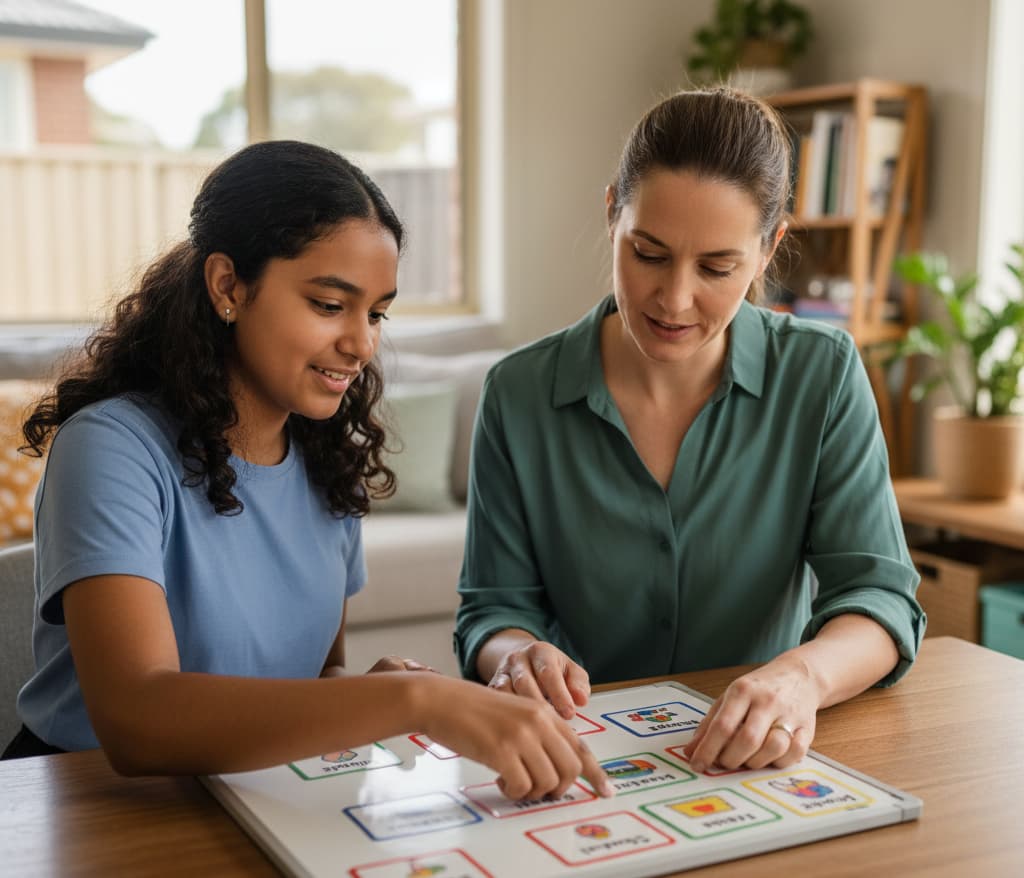
Teaching strategies to build skills over time, such as requesting help, taking breaks, or using visual supports
Response strategies for carers and support workers, so everyone responds consistently
A plan for tracking progress, so you can see what is changing and adjust
If restrictive practices are involved, the plan must be clear about reduction and elimination over time, and follow the rules.
What this looks like day to day
Positive Behaviour Support should feel usable. For example:
At school, the plan might support transitions between activities with predictable cues.
At home, it might reduce conflict by changing the timing of chores and using clear choices.
In the community, it might include a step by step plan for busy places with sensory breaks.
At 2b Inclusive, we work in a person centred support way and use a neurodiversity affirming lens. That means we consider sensory needs, communication differences, and nervous system overload as part of the picture.
How this works under the NDIS
The NDIA guideline explains that behaviour support can be funded when it meets NDIS funding criteria and aligns with Commission requirements for Positive Behaviour Support.
In many plans, this funding sits under Capacity Building in Improved Relationships.
Mini FAQ
Is a Behaviour Support Plan only for "severe" situations?
No. Many people use NDIS Positive Behaviour Support for everyday challenges that affect safety, participation, and wellbeing.
Will the plan include my family and support workers?
It should. The Commission notes plans should be developed in consultation with the person, family, carers, and other supports.
Do we have to follow the plan exactly?
Plans should be followed for consistency, but they can be reviewed and updated when life changes or strategies need adjusting.
Can a Behaviour Support Plan help at school and home?
Yes. Positive Behaviour Support is often most effective when strategies are consistent across settings.
If you are in Adelaide and want a practical Behaviour Support Plan that your whole team can actually use, contact 2b Inclusive. We provide NDIS Positive Behaviour Support, Early Intervention for children 0 to 6, and Social Work support to help connect you with the right resources.
This is general information and not personal advice.