
Positive Behaviour Support in Australian Classrooms and Early Learning
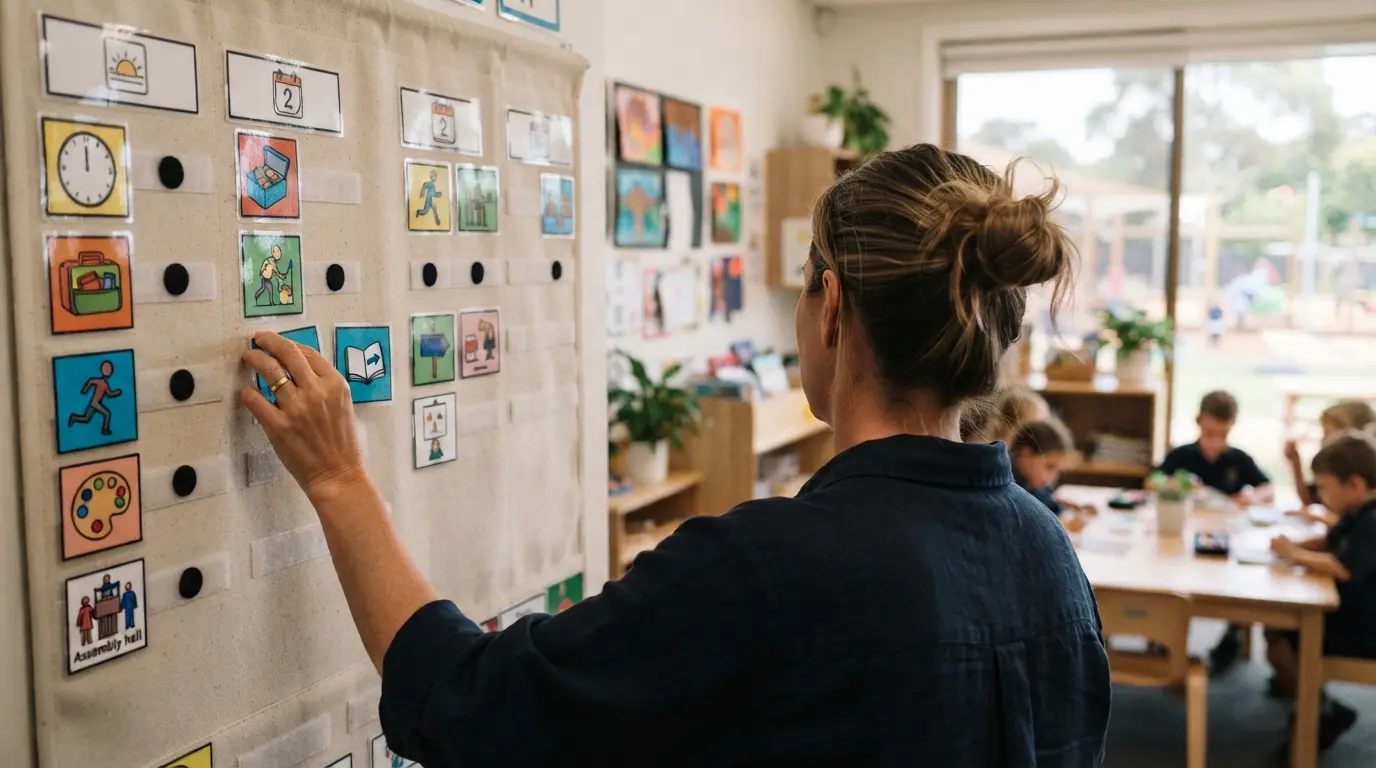
Applying pbs in schools gives educators a reliable framework to understand student needs and improve classroom engagement. We use positive behaviour support to replace punishment models with direct skill instruction, room adjustments, and predictable regulation routines. This approach helps school teams create steady spaces where students participate and learn alongside their peers.
Key Takeaways
Positive behaviour support treats student actions as communication rather than defiance.
Multi-tiered systems match room adjustments and individual plans to student needs.
Early childhood settings rely on developmental guidance rather than delayed point systems.
NDIS practitioners partner with South Australian schools to eliminate restrictive practices and protect student rights.
What Is Positive Behaviour Support in Educational Environments?
When we introduce pbs in schools, we replace traditional discipline with a proactive, skill-based framework. Traditional disciplinary methods rely on suspensions, detentions, and temporary penalties that focus strictly on rule compliance. Positive behaviour support shifts that focus toward environmental adjustments, proactive skill-building, and long-term competence.
Disruptive actions do not happen without a reason. When students call out, walk away from desks, or withdraw, they communicate unmet sensory, social, or emotional needs. Every action serves a functional purpose, such as gaining attention, getting sensory input, or escaping difficult learning tasks.
Our primary task is to identify what sparks the behaviour and what keeps it going. We then teach an equivalent replacement skill so the student can meet that same need safely.
Shifting from Traditional Punishment to Skill Instruction
Replacing punitive office referrals with direct coaching on communication and self-regulation.
Modifying lesson formats, desk arrangements, and noise levels rather than isolating the student.
Setting clear daily routines so learners know what happens next.
Our clinical team applies this framework across metropolitan Adelaide. Through our NDIS positive behaviour support Adelaide services, we evaluate real-world classroom conditions. We help teachers move away from reactive reprimands and build structured learning routines that lead naturally into multi-tiered school frameworks.
Understanding the Multi-Tiered System of Supports
Effective behaviour support organizes interventions into three structured layers based on how students respond. This Multi-Tiered System of Supports (MTSS) matches the intensity of help to the actual needs of the school community.
Universal Tier 1 practices establish the foundation for all students. When schools build consistent room routines and clear visual expectations, most children manage their learning day without extra clinical intervention. According to research from the Center on PBIS, universal Tier 1 systems meet the behavioural needs of roughly 80 to 85 percent of all students.
The remaining students receive targeted or intensive support depending on the barriers they encounter during school routines.
Tier Breakdown
Tier 1 (Universal Prevention): Predictable schedules, clear expectations, and regular positive praise for all students.
Tier 2 (Targeted Support): Small-group coaching, such as Check-In/Check-Out or targeted social skills practice, for roughly 10 to 15 percent of students who need extra structure.
Tier 3 (Intensive Support): Individualised assistance for 1 to 5 percent of students facing complex behavioural barriers, guided by an NDIS behaviour support practitioner and a functional behaviour assessment.
Early Childhood Realities: The Pyramid Model
As children move through different developmental stages, their capacity to process rules changes. Toddlers and preschoolers in childcare cannot connect tokens, sticker charts, or delayed reward stores to their current actions. Their cognitive development requires immediate feedback and concrete support.
Early childhood centres use the Pyramid Model instead of school-wide point matrices. This framework organizes multi-tiered supports specifically for early learning by focusing on responsive adult-child relationships, emotional vocabulary, and co-regulation. Educators teach two or three basic ideas, such as being safe and being kind, and provide descriptive verbal praise right when positive actions occur.
When a young child becomes distressed, staff step in with sensory calming techniques instead of isolating time-outs. Families can access our early childhood intervention Adelaide programs to align these developmental routines between home and childcare.
Core Pyramid Model Practices for Early Learning
Teaching emotion labels during circle time using photo cards and mirror play.
Providing immediate physical and verbal co-regulation when a child shows early signs of distress.
Structuring transition routines with songs and visual timers so children anticipate room changes.
How NDIS Behaviour Support Integrates with South Australian Schools
Moving from universal classroom strategies to individual plans requires close collaboration between therapists, teachers, and school leadership. In South Australia, public schools follow clear departmental policies to ensure all students receive fair, non-discriminatory care.
Educators align their classroom adjustments with the South Australia Department for Education behaviour support policy. This policy instructs schools to use the least exclusionary response methods possible to keep students engaged in education. The policy also requires explicit instruction in interoception to help children recognise body signals and regulate their emotions.
A central priority of this joint work is eliminating regulated restrictive practices in schools. Findings from the Disability Royal Commission Final Report show that exclusionary discipline, such as suspensions and physical isolation, directly disrupts educational progress for students with disabilities.
Collaboration Areas Between Practitioners and Teachers
Functional Behaviour Assessments: The practitioner reviews classroom routines, identifies environmental triggers, and drafts practical support strategies.
Direct Classroom Adjustments: Teachers share real-time observation notes and test sensory breaks during reading or maths blocks.
Eliminating Restrictive Practices: The team removes seclusion practices and physical restraints to comply with rules set by the NDIS Quality and Safeguards Commission.
Practical Classroom and Childcare Strategies Every Educator Can Use
Educators can apply practical techniques immediately to strengthen classroom culture without waiting for an individualised clinical plan. Simple environmental changes often prevent frustration before it turns into classroom disruption.
The most effective tools focus on clear expectations and predictable physical environments. When students know what to expect and have a safe way to express discomfort, anxiety drops across the entire room.
Daily Classroom Strategies
Use the 4-to-1 Interaction Ratio: Deliver four positive remarks for every single correction to build rapport and reinforce expected skills.
Teach Interoception Exercises: Guide students to notice internal body cues, such as heart rate or muscle tension, using cold-water sips and heavy-work stretches.
Design Low-Arousal Break Spaces: Set up a quiet corner with beanbags and noise-reducing headphones so overstimulated students can reset without leaving the room.
Teach Replacement Behaviours: Provide a visual break card for students who throw items during difficult tasks, showing them that clear requests work faster than distress actions.
Post Visual Schedules: Display picture-based schedules at student eye level to simplify transitions between activities.
Building an Individual Tier 3 Behaviour Support Plan
When universal strategies are not enough to keep a student safe and engaged, school teams and therapists initiate an individualised planning pathway. This clinical process evaluates the student's unique learning profile, sensory processing needs, and classroom environment.
Our practitioners gather information through direct observations, teacher meetings, and parent interviews. We examine background factors, including sleep quality, noise sensitivity, and task difficulty, to understand why the behaviour occurs.
The 5-Phase Planning Pathway
Phase 1 (Action Team Formation): The classroom teacher, family, school leadership, and NDIS practitioner meet to set target priorities.
Phase 2 (Functional Behaviour Assessment): The team collects antecedent, behaviour, and consequence data across typical daily routines.
Phase 3 (Collaborative Co-Design): Practitioners draft room modifications, sensory accommodations, and lessons for functionally equivalent replacement behaviours.
Phase 4 (Classroom Coaching): The practitioner works alongside educators in the classroom to model and test the recommended strategies.
Phase 5 (Progress Monitoring): The team reviews daily tracking notes every four to eight weeks to refine strategies as student needs change.
Frequently Asked Questions
Does pbs in schools support neurodivergent students with autism or ADHD?
Yes, when adapted through a neurodiversity-affirming lens. We use positive behaviour support to adjust sensory environments and teach self-advocacy skills. We do not use compliance drills or suppress natural, non-harmful stimming.
How does an NDIS behaviour support plan connect with school learning plans?
Our practitioners work with teachers to align clinical strategies with individual learning plans. This collaboration creates consistent routines across classroom instruction, playground times, and home life.
What should staff do if a student does not respond to tier 2 support?
Staff should check implementation consistency first. If strategies are applied consistently without progress, arrange an observational assessment to examine underlying sensory, communication, or learning needs.
How long does it take to see positive changes in classroom engagement?
Consistent classroom routines often yield observable improvements within two to four weeks. While individual timelines vary based on complexity, tailored Tier 3 plans often demonstrate clear reductions in distress within four to eight weeks of steady practice.
Partner with Our Adelaide Team
Every child deserves a safe, supportive learning environment that respects their individual strengths.
Our registered practitioners deliver personalised support across metropolitan Adelaide to help schools, early childhood centres, and families work together effectively.