How Speech Pathologists and Behaviour Support Practitioners Work Together
How do speech pathologists and behaviour support practitioners work together? They form a collaborative team. By combining communication tools with positive support, they help NDIS participants share their needs safely.
Key Takeaways
Communication and behaviour connect directly because actions often replace missing words.
Speech therapy provides picture boards, talk buttons, and simple signs that reduce daily frustration.
Joint planning creates one clear NDIS care plan instead of two separate lists of rules.
Combined therapy sessions cut down on travel time, lower costs, and reduce family stress.
Shared visual schedules keep daily routines consistent across home, school, and community settings.
Understanding the Link Between Communication and Behaviours of Concern
Many people wonder why communication needs and behaviours of concern connect. The answer is simple. Behaviour is a way of speaking up when words are hard to find. When someone cannot share feelings, they get overwhelmed. They may use big actions to ask for help, stop an activity, or signal pain.
Research from the Australian Psychological Society shows that challenging actions serve a purpose. A person might throw an object to get a break from noise. They might hit something because they feel tired.
Evidence recognized by Speech Pathology Australia shows that communication tools can help reduce distressed behaviours. Giving someone a way to speak helps them express needs safely. Instead of fixing the person, we find what they are trying to tell us.
Speech pathologists and behaviour practitioners work to identify the root cause of these actions. They check daily routines to see where communication breaks down. By spotting triggers early, the team steps in before frustration builds up. This approach respects individual choices and keeps everyone safe.
How Speech Pathology Helps Participants Express Needs Without Distress
Once a team understands that behaviour is communication, they provide simple tools to replace distress. How does speech pathology help a participant express their needs without distress? It gives them safe ways to speak up.
Speech therapists introduce communication tools matched to the person's interests. Known as Augmentative and Alternative Communication (AAC), these tools bridge the gap when speaking is hard:
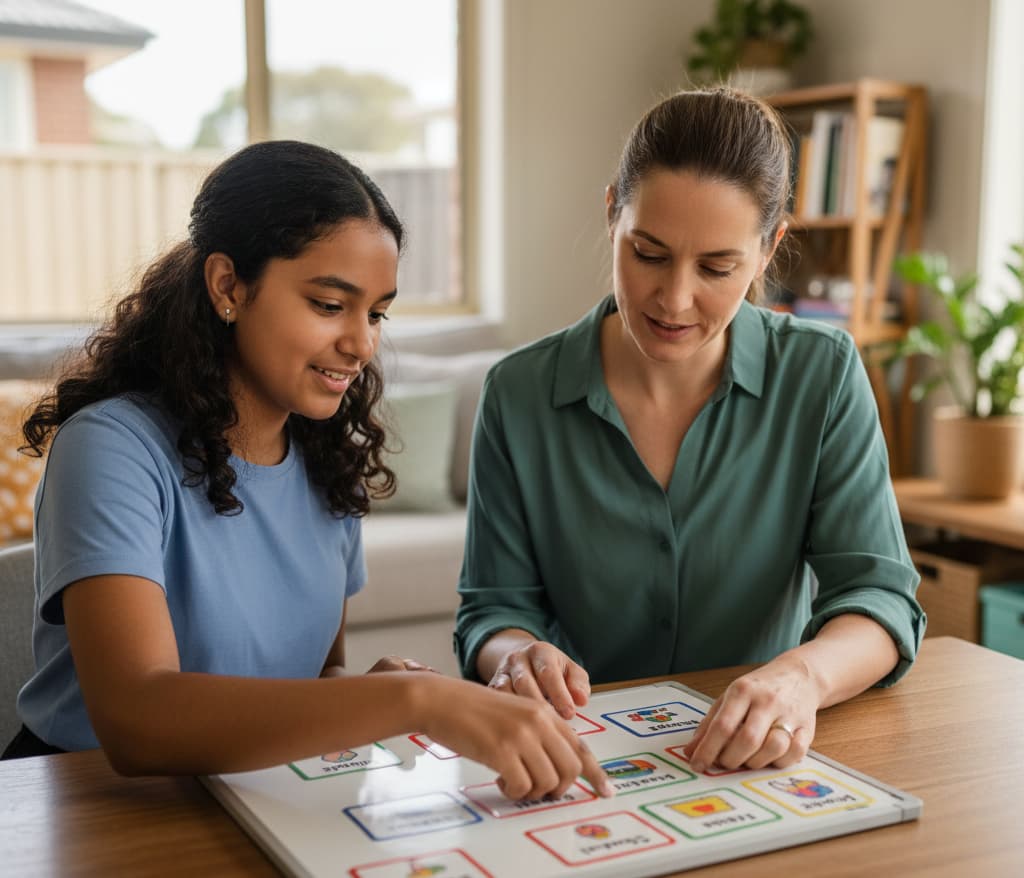
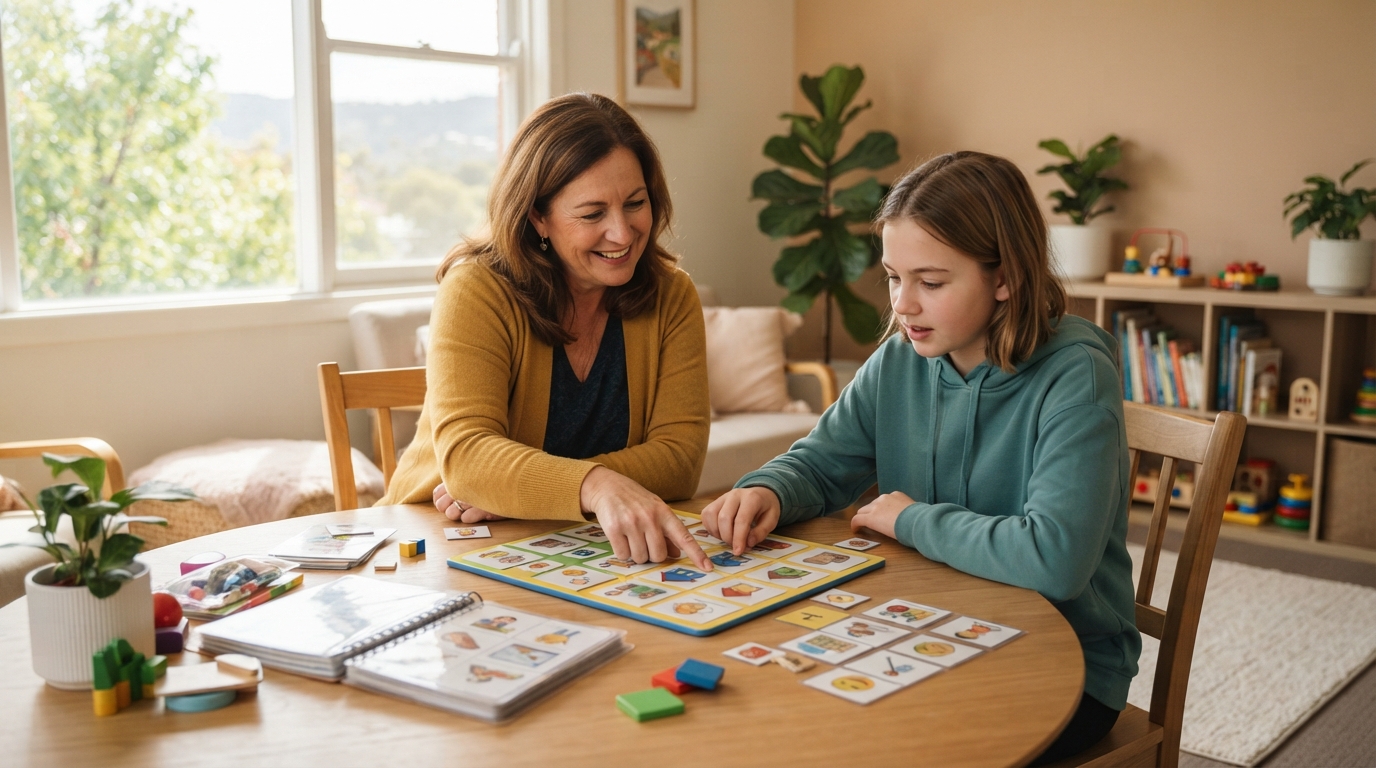
Visual Picture Boards: Pointing to simple icons to ask for snacks, breaks, or activities.
Speech-Generating Apps: Tapping a tablet button to say phrases like "I need help."
Simple Physical Signs: Using gestures to signal "stop", "wait", or "more" without stress.
When a participant learns these tools, daily stress drops. They no longer need big actions to get attention or ask for a break. Speech therapists also teach words for physical feelings like heat, hunger, or pain. Learning these basic words builds self-advocacy skills, letting participants protect their space and share choices with confidence.
What Joint Planning Between Practitioners Looks Like
An AAC tool works best when both therapists build the support system together. What does joint planning between a speech pathologist and a behaviour support practitioner look like? Both professionals meet to write one shared guide for daily care. They remove confusing medical words so everyone follows the same path.
The two therapists review assessment results together. The behaviour worker checks why an action happens. The speech therapist picks words or picture cards that fit the person's developmental stage. Together, they choose replacement skills that serve the exact same purpose as old actions.
Instead of two separate guides, they build a single plan. This plan follows guidelines from the NDIS Quality and Safeguards Commission to eliminate restrictive practices and promote safe care.
Therapists work with our NDIS positive behaviour support Adelaide team to align all daily goals. This smooth teamwork is designed to help practitioners align on using the same picture boards, words, and encouragement.
How Joint Therapy Saves Time and Reduces Family Stress
A shared plan leads directly into combined therapy sessions, simplifying care for everyone. How does joint therapy save time and reduce stress for families? It combines appointments so families spend less time driving to clinics and attending meetings.
Driving to different clinics in Adelaide tires out any family. Joint therapy sessions bring both therapists into one room at the same time. While the speech therapist sets up a communication app, the behaviour worker helps the person stay calm. This co-treatment method lets participants practice speaking and regulating feelings together.
Fewer Appointments: Families attend one combined session instead of making separate trips.
No Conflicting Advice: Both therapists agree on the exact steps to take at home.
Unified Progress Meetings: Review meetings happen together so parents only explain goals once.
Smart Budgeting: Using capacity building funding for joint sessions makes NDIS plans last longer.
Working together prevents conflicting advice so parents never guess which therapist to follow. Everyone works from the same page, bringing peace of mind home.
Keeping Strategies Consistent Across Home and School
The final piece of successful therapy is making sure strategies work everywhere. How can a multidisciplinary team keep strategies consistent across home and school? They share the same visual schedules, simple routines, and training tips across every setting.
A strategy only works if everyone knows how to use it. Our therapists train parents, teachers, and support workers to use the same tools. They create shared picture boards and visual timers that look identical in the classroom and at home. This environment-wide consistency helps participants feel safe throughout the day.
Our team provides short video guides showing how to model words on a talk button during play. They also visit classrooms through our early childhood intervention Adelaide service to assist teachers directly. When teachers, carers, and therapists use consistent words and steps, it is designed to help the participant practice and build their communication skills.
We serve families across Adelaide on Kaurna land. We focus on building inclusive, neurodiversity-affirming environments where every person feels respected and supported.
Frequently Asked Questions
What Is the Role of a Speech Therapist in Positive Behaviour Support?
A speech therapist identifies communication tools that help a person share their needs. By introducing clear words, signs, or picture boards, they aim to reduce frustration and complement the overall behaviour support plan.
Can Speech Pathology and Behaviour Support Use the Same NDIS Funding?
Yes. Both services are funded under the Capacity Building section of an NDIS plan. Families can use their budget for individual sessions, joint planning, or combined therapist appointments.
How Do I Know if My Child Needs Joint Therapy Sessions?
If your child struggles to speak and experiences frequent meltdowns or big reactions, joint therapy can help. A combined team ensures communication tools and behaviour supports are built together from day one.
How Do Therapists Train Teachers to Use Communication Boards at School?
Therapists run short training sessions, provide simple instruction sheets, and film quick demonstration videos. They visit the classroom to show teachers and aides how to model picture boards during daily class routines.
Start Your Collaborative Care Journey Today
Ready to bring your support team together for a smoother therapy experience?
Contact our friendly Adelaide team to learn how our allied health practitioners can support your family's NDIS goals.